
Lower Middle Market Mergers and Acquisitions
Closing is what matters
Since 2005, Wayne Wright has successfully guided nearly one hundred business owners through the sale of their companies.
Built on Experience Driven by Results
Wayne holds the Certified Business Intermediary (CBI) and Certified Mergers & Acquisitions Professional (CM&AP) designations and was the first globally to complete the Master Certified Business Intermediary designation alongside a select group of peers.
Beyond credentials, Wayne has personally owned, operated, acquired, and sold multiple businesses. He understands the realities of ownership from every side of the table. Wright Business Advisors was built on firsthand experience and disciplined execution.
Specializing in upper Main Street and lower middle market transactions, our firm represents privately held companies generating between $1 million and $25 million in annual revenue. We assist owners in developing clear exit strategies, preparing for market.
We assist owners in developing clear exit strategies, preparing for market, structuring transactions thoughtfully, and navigating negotiations with confidence and discretion. Throughout every engagement, strict confidentiality is maintained and every decision is guided by transparency.
Throughout every engagement, strict confidentiality is maintained and every decision is guided by transparency, accountability, and respect for the legacy you have built. We are a lower middle market advisory firm that limits the number of engagements.
Our objective is simple. Position your business properly. Protect your value. Close successfully. We sell more than ninety-six percent of the businesses we bring to market, including every engagement over the past twelve months.
Business Insights From Wayne Wright
Good decisions often start before a business is listed. Explore practical advice on preparing for a sale, understanding buyer concerns, and protecting the value you have built.
Explore more articles and videos in the Wright Business Advisors resource library.
Every business has its own story. Our published transaction stories show why preparation, buyer fit, confidentiality, and careful coordination matter when ownership changes.








Selling a business is a process not an event
Our responsibility is to protect value, manage risk, and guide the transaction toward a successful close. You stay involved in the decisions while we help keep the work organized.
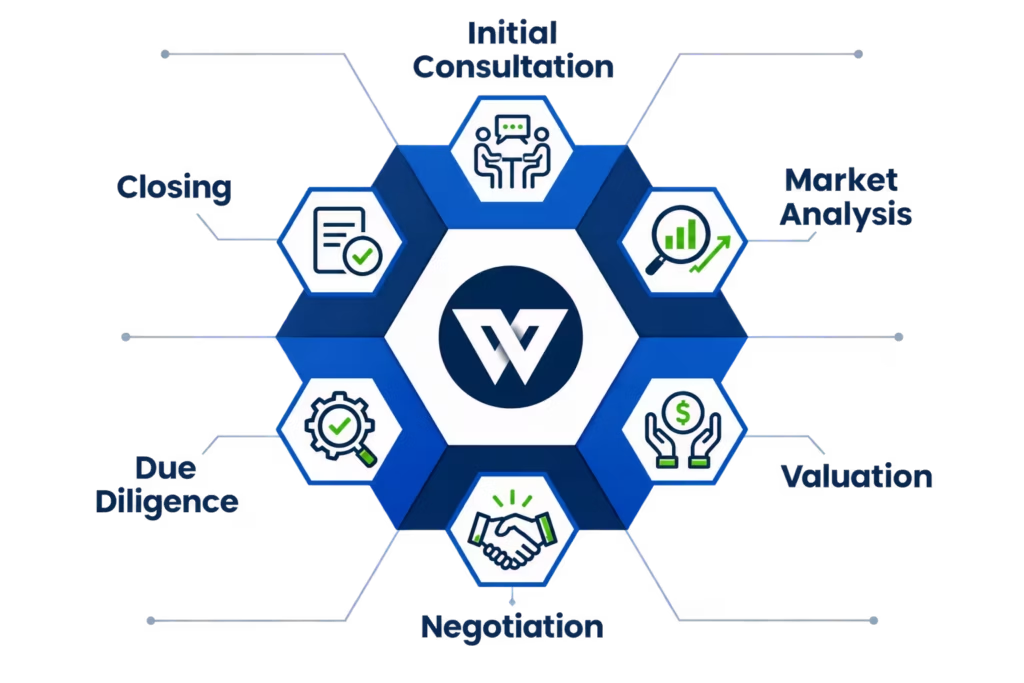
First, we listen.
Tell us about the business you’ve built, your goals, and your ideal timing. We’ll discuss your questions and whether our experience is the right fit for what you need.
Understand your options and agree on a sensible next step.
Understand the landscape.
We look at your business in the context of its industry, market conditions, and the buyers who may be a fit. This helps shape how the opportunity will be positioned.
See how your business fits into the current market.
Put value in perspective.
We review the financial story, operating strengths, and factors that influence business value. Together, we discuss pricing expectations and what supports them.
Set informed expectations before entering buyer conversations.
Work toward the right terms.
A strong offer is about more than its headline price. We help you assess buyer proposals and negotiate the terms, structure, and practical details of a potential deal.
Consider the full offer and how it supports your goals.
Move through the details.
Buyers will examine the business closely. We help coordinate information requests and conversations with the professionals involved, keeping the process organized.
Address questions and work through outstanding transaction conditions.
Bring it all together.
We work alongside the parties and their professional advisors as final documents, closing conditions, and transition arrangements come together.
Move toward a completed transaction and a planned handover.
Our Core Values
Follow the “Golden Rule” and do what is right, even when unnoticed.
Keep promises and go the extra mile.
Embrace a servant mindset, focusing on clients’ goals, not ourselves.
Balance confidence with humility.
Enjoy the journey and have fun along the way.
Why Work With Wright Business Advisors
We keep the work focused on the things that matter to a seller: value, qualified buyers, confidentiality, and a clear path to closing.
You pay only upon a successful closing, subject to your engagement terms.
We work toward a defensible market value based on the business and the market.
We help manage the process from preparation through closing.
You can stay focused on customers, employees, and daily operations.
We work to identify and qualify serious prospective buyers.
Confidentiality is considered at every stage of the engagement.
Business Brokerage Built Around Your Next Chapter
Wayne has owned and sold businesses himself. That experience shapes the questions he asks and the advice he gives. The aim is simple: help you understand your options and make informed decisions about what comes next.
Business Brokerage for Established Companies
A business broker helps an owner prepare a company for sale, present the opportunity to qualified buyers, review offers, and work through negotiations and due diligence. The details matter because the headline price is only one part of the deal.
As a business brokerage firm focused on privately held companies, we look at financial performance, management, customer relationships, and how the business can operate after ownership changes.
Lower Middle Market M&A
Lower Middle Market M&A transactions may involve strategic buyers, investor groups, more detailed financial review, and more complex deal terms. Buyers may look closely at earnings, working capital, management depth, and the company’s growth opportunities.
We help owners understand the process, prepare information, compare proposals, and coordinate with their legal and financial advisors as the transaction moves forward.
Business Exit Planning Starts Early
Business Exit Planning is useful even when a sale is still a few years away. Wayne’s advice is to build a business that can keep working without the owner handling every decision. Strong management, clear procedures, reliable financial records, and broader customer relationships can make a company easier to transfer.
Start by identifying what only you can do today, then build the people and systems that can share those responsibilities over time.
Business Valuation Advisory
Business Valuation Advisory looks at more than revenue. Earnings, cash flow, customer concentration, recurring income, working capital needs, industry conditions, and owner involvement can all affect how buyers view a company.
A broker opinion of value can help set expectations for a possible sale. It is not the same as a formal appraisal for every legal, tax, or financial purpose.
Guidance From a Business Sales Advisor
Wayne’s experience as an owner, buyer, seller, and advisor gives him a practical view of the work behind a transaction. A business sales advisor can help organize the process, prepare for buyer questions, compare offers, and keep the seller focused on the decisions that need attention.
We bring in attorneys, accountants, lenders, and other specialists when their advice is needed. Each professional has a clear role in the transaction.
A Confidential Business Sale
A confidential business sale needs a careful process. Early marketing should avoid sharing the company’s identity or sensitive details before a prospective buyer has been screened and the right confidentiality steps are in place.
We work with owners to manage information, communicate with qualified buyers, and limit unnecessary disruption to employees, customers, suppliers, and day-to-day operations.
Serving Denver and Colorado's Front Range
Wright Business Advisors works with privately held companies across Colorado, with offices in Arvada and Denver’s Cherry Creek area. If you are looking for a Colorado business broker or a Denver business broker, start by discussing your company’s size, timing, and what you want from the sale. Owners comparing business brokers in Colorado should ask about experience with similar companies, buyer screening, confidentiality, and how offers are evaluated. Our work covers business brokerage and lower middle-market M&A; the right approach depends on the size and complexity of the transaction.
Some owners contact a business sales broker when they are ready to explore a sale. Others want to understand value or improve readiness first. A business sales broker can help coordinate buyer conversations and the sale process, while attorneys and tax professionals advise on legal and tax matters. We can start with the question that matters most to you, without assuming that listing the business is the immediate next step. Whether you are researching a business broker in Colorado, considering business brokerage services in Denver, or planning a future exit across the Front Range, the first conversation is about your business and your goals.
Our Front Range business brokerage experience is focused on helping owners understand their options and make an informed decision about timing.
A Reality for Business Owners
- More than 80% of a business owner's net wealth is tied to thelr business.
- Most owners are unprepared when the time comes to sell.
- Proper exit planning can minimize or defer capital gains taxes.
- Over 75% of businesses in the lower middle market are owned by Baby Boomers.
- The “Silver Tsunami” is creating unprecedented opportunities for buyers.
Why Plan Your Exit Now?
- Increase the value of your business.
- Improve transferability and reduce risk.
- Create more options and flexibility.
- Position your business for the right buyer.
- Control your future don't leave it to chance.
Confidential. No Obligation.
End in Success.
- You only pay for a successful close.
- Secure the highest possible sales price.
- Professionally oversee and manage the process.
- Allow you to maintain your focus on running your business while we handle the transaction.
- Identify the ideal, qualified buyer for your needs.
- Uphold strict confidentiality throughout the transaction.
Build a Business That Can Run Without You
Delegate key relationships, document how work gets done, and give capable managers room to make decisions. Wayne recommends starting two to three years before a planned sale when possible.
Get Financial Records in Order
Keep financial statements consistent and document owner benefits or unusual expenses as they occur. Clear records help buyers understand performance and reduce avoidable questions.
Think About Customer Concentration
If a large share of revenue depends on one customer or supplier, buyers may see additional risk. Consider ways to strengthen relationships and diversify revenue where practical.
Prepare for Buyer Due Diligence
Contracts, leases, employee information, intellectual property, equipment, and financial records may be reviewed. Finding gaps early gives you more time to address them.
Make Your Business Easier to Understand and Transfer
In a recent article, Wayne shared a lesson from selling a business of his own: a successful business is not always a transferable business. A company can be profitable and still rely too much on its owner.
Wayne wrote about a business he sold in 2016. A capable management team and customer relationships that did not depend entirely on him helped reduce risk for the buyer and lender. That experience is why he encourages owners to work on transferability well before a sale.
Preparing for a sale means looking at the whole operation, not just the financial statements. Strong management, documented procedures, dependable customer relationships, and realistic expectations can help a buyer see how the business may perform after the transition.
For a deeper look, read Wayne’s article on preparing your business for sale two to three years in advance.
Owners considering a business transaction can also review our business selling FAQs or learn more about exit planning and coaching.
FREQUENTLY ASKED QUESTIONS
Questions About Selling Your Colorado Business?
Everything you need to know about business brokerage, valuation, and planning a sale.
Do I have to pay a business broker upfront?
No. Wayne Wright’s compensation is tied to a successful closing, rather than upfront brokerage fees. Review your engagement agreement for the specific fee terms.
How do I choose a Colorado business broker?
Choose a Colorado business broker with experience selling businesses like yours, a clear valuation process, qualified buyer screening, and a proven approach to confidential business sales.
When should I start planning to sell my business?
Ideally, begin business exit planning two to three years before your intended sale. This gives you time to improve financial records, strengthen management, reduce owner dependence, and prepare your business for buyers.
How much is my business worth?
Your business valuation depends on earnings, financial performance, industry conditions, growth potential, and buyer demand. A Business Valuation Advisory engagement can help establish a realistic market value.
How can I increase my business value before selling?
Improve profitability, maintain accurate financial records, strengthen management, and reduce dependence on the owner. These steps can improve transferability and make your business more attractive to qualified buyers.
Can I sell my business confidentially?
Yes. A confidential business sale involves carefully managing sensitive information, screening prospective buyers, and using confidentiality agreements before sharing protected business details.
How long does it take to sell a business?
A business sale can take several months or longer, depending on the company’s financial readiness, buyer demand, due diligence, and financing. Preparing early can help reduce avoidable delays.
What is the difference between a business broker and an M&A advisor?
A business broker typically manages business marketing, buyer qualification, offers, and negotiations. Lower Middle Market M&A advisory may involve more complex financial analysis, deal structuring, and negotiations.
Can I plan my business exit before I am ready to sell?
Yes. Business Exit Planning can begin years before a sale. You can assess your company’s value, strengthen operations, develop management, and prepare for a future ownership transition.
What size businesses does Wayne Wright work with?
Wayne Wright specializes in upper Main Street and lower middle-market businesses generating approximately $1 million to $25 million in annual revenue, serving business owners across Denver and Colorado’s Front Range.